Before enrolling, most parents ask the same thing: is a bigger class perfectly fine, or is a small class really worth it? The honest answer is that class size changes how much time your child spends actually being coached, and that matters most in the first few lessons.
What “class size” really means in the pool
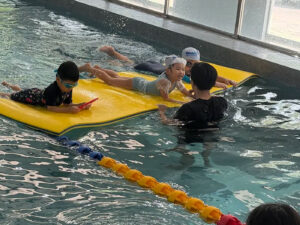
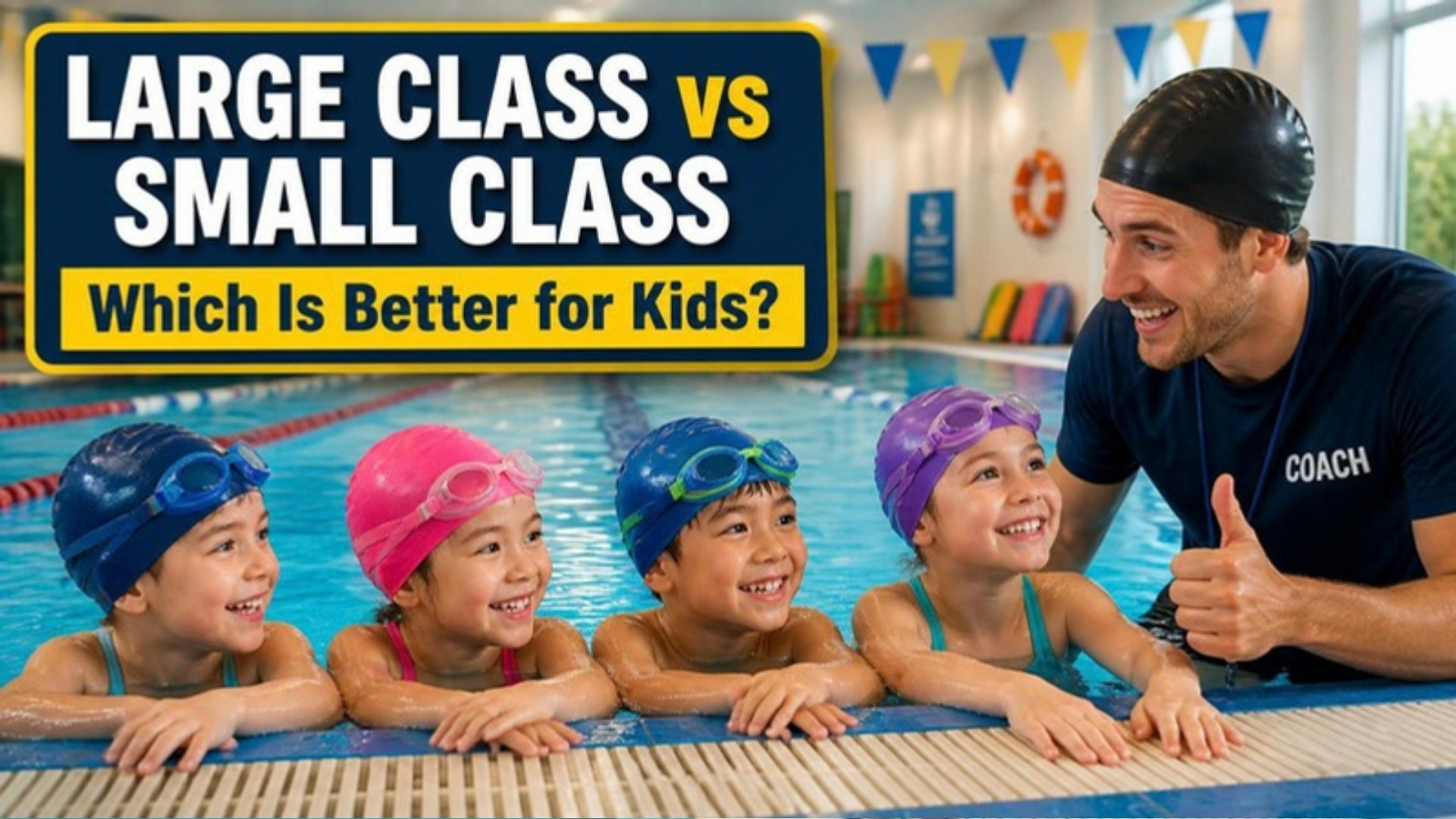
Class size is the number of students one coach looks after at the same time. In a swimming lesson, children take turns: one swims while the others wait at the wall. The more students, the longer each child waits and the less feedback each one gets. Some swim schools run classes of nine or more; WeBorn keeps groups around half that size.
Large classes: pros and cons
- Pros: usually a lower price per lesson, more classmates to play with, and a fun, energetic atmosphere.
- Cons: less time with the coach, longer waiting at the pool edge, and it is harder for the coach to notice a child who is scared, tired or doing a movement wrongly.
Small classes: pros and cons
- Pros: the coach sees every child, corrects technique in real time, and adjusts the pace to each child. Nervous beginners usually settle faster.
- Cons: fewer classmates, and the price per lesson can be higher than a crowded class.
Large vs small swim class at a glance
| Large class | Small class (4–5 students) | |
|---|---|---|
| Coach attention | Shared between many children | Each child is watched and corrected |
| Time in the water | More waiting at the wall | More swimming time per child |
| Safety | Harder to watch everyone | Easier to spot a child in trouble |
| Nervous beginners | Can feel lost or overlooked | Usually settle in faster |
| Price per lesson | Often lower | Often a little higher |
| Social fun | More classmates | Closer group, fewer classmates |
Which class suits your child?
- Choose a small class if your child is under 6, new to the water, afraid of water, or learns best with plenty of encouragement.
- A larger class can work if your child is already comfortable in the pool, confident, and mainly needs practice and fitness.
Questions to ask any swim school
- How many students does one coach teach at the same time?
- How long does each child actually spend swimming in a 30–45 minute lesson?
- Is the pool heated and indoors, so lessons are not cancelled by rain or cold?
- Are lessons counted one by one, and can I make up a lesson I miss?
- Is there a clear step-by-step programme, or does every lesson feel random?
How WeBorn runs its classes
WeBorn runs small-group classes, about half the size of a typical swim school, in indoor heated pools in Taman Putri Kulai, IOI Palm Villa Kulai, Gelang Patah and Skudai Sutera Sport World. Children follow the 6-level WeBorn Path, babies start with gentle baby swimming, and lessons are counted individually with make-up lessons for classes missed with prior notice.
Not sure which group fits? Read how to choose the right swim school, check the fees and trial class, or message us and we will suggest the right class for your child’s age and your nearest pool.
Frequently asked questions
What is a good swim class size for beginners?
For beginners and young children, a small group of around 4–5 students per coach works best, because the coach can watch every child in the water and correct technique straight away.
Is a small swim class always better than a large one?
Not always. Confident older swimmers who already know the basics can do well in a larger squad. For first-time swimmers, nervous children and babies, smaller groups are usually the safer and faster way to start.
Can we try a small class before signing up?
Yes. WeBorn offers a trial class voucher that is credited back in full when you enrol in a course. See the fees page for the current price, or message us on WhatsApp.