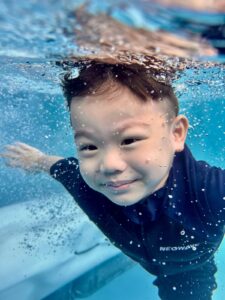
Almost every parent who brings their child to WeBorn Swim Academy for a first lesson asks the same question: “My child is terrified of water and cries the moment it touches them — can they still learn to swim?”
The answer is yes. Being afraid of water is a normal stage that most children go through. The key is using the right approach and building trust gradually, instead of forcing a child to “just get used to it”.
Why Are Kids Afraid of Water?
Fear of water is rarely something a child is born with. It usually comes from a few common causes:
- Loss of control: there’s no solid ground underwater, so the body instinctively feels unsafe
- A bad past experience: swallowing water or getting it in the ears leaves an unpleasant memory
- Picking up on a parent’s own anxiety: if you’re nervous around water, your child feels it too
- An unfamiliar environment: a new pool’s temperature, smell and echo can all feel strange on the first visit
Once you understand the cause, it’s much easier to address.
1. Start With “Playing in Water”, Not “Learning to Swim”
Don’t start by asking your child to put their face in the water or hold their breath. Let them play in the shallow end first — squirting water toys, pouring water, splashing around — so water becomes something fun rather than a task. WeBorn’s baby and toddler swim classes are designed exactly for this stage, helping children build a positive first impression of water in a safe, heated indoor pool.
2. Let Your Child Set Their Own Pace
Forcing a child into the water usually makes fear worse. A more effective approach: let them sit at the pool edge with their feet in the water first, then progress to standing while holding the edge, and only then enter the water with a coach or parent nearby. Every child needs a different amount of time — there’s no need to compare progress with other kids.
3. Turn Breathing and Floating Into a Game
Instead of a stern “hold your breath”, playful language like “blow bubbles like a fish” is much easier for a child to accept. WeBorn’s exclusive 6-stage WeBorn Path curriculum breaks every skill down into small, game-like steps a child can understand and is willing to try — from blowing bubbles to floating to freestyle, building confidence one step at a time.
4. Choose Small Class Sizes, Not Large Groups
If one coach has to watch 8-9 children at once, it’s hard to notice each child’s emotional state. WeBorn keeps classes at about half the size of a typical swim school, so coaches can catch a nervous child early and adjust the pace instead of pushing ahead regardless.
5. Stay Calm — Don’t Let Your Own Anxiety Show
Children are extremely sensitive to their parents’ emotions. Even if your child cries, try to stay calm and encouraging rather than looking more anxious than they are. Most children need 3-8 lessons to overcome their fear of water — that’s a normal learning curve, not a sign that something is wrong.
When Should You Consider a Different Approach?
If your child still can’t accept getting into the water after more than 10 lessons, it’s worth talking to the coach about adjusting the pace, or restarting from a pure “water familiarisation” programme rather than continuing to push the original schedule.
Preparing to enrol your child? Have a look at our first-timer’s checklist and FAQ before their first class.
WeBorn Swim Academy has focused on children’s and baby swimming since 2010, with heated indoor pools, small class sizes, and our exclusive WeBorn Path curriculum. We have 4 branches in Johor: Taman Putri Kulai, Kulai IOI Palm Villa, Gelang Patah, and Skudai Sutera Sport World.
If your child is afraid of water, book a free trial lesson and let our coaches help them take the first step.